
Writing Through Grief
This piece was originally published in Hadara Magazine, Issue 14, Spring-Summer 2026
It has been 12 years since she published a novel, but Chimamanda Ngozi Adichie returned to fiction with the highly anticipated Dream Count.
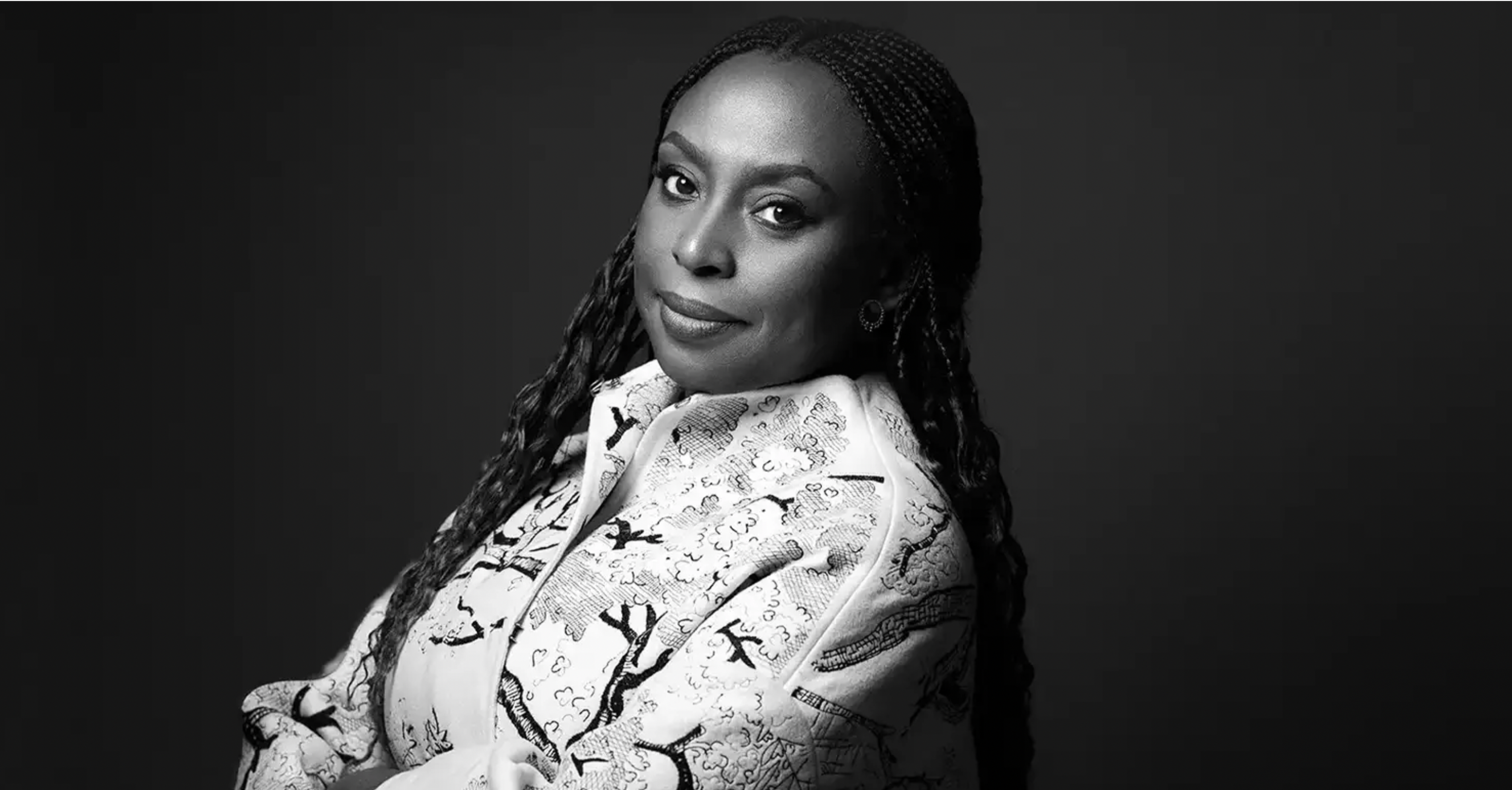
Chimamanda Ngozi Adichie. Photo by Joel Saget.
[Editor’s note: This interview was done, and the story written, before the passing of Ms. Adichie’s son in January.]
Entering the room unhurriedly, Chimamanda Ngozi Adichie speaks in a quiet voice. She asks for a piece of chocolate cake. The room is buzzing busily around her, a reminder that in literary circles, Adichie has near superstar status. A bestselling global author, her work has been translated into 55 languages. Yet, when we sit down to speak, her attention is wholly on our conversation. Despite the crowds, she makes me feel as though we are the only ones there.
Our encounter is at Sharjah International Book Fair in November, where Adichie is coming to the tail end of a regional tour for her highly anticipated new novel Dream Count, released last March. It has clearly been a long day, and while she says she enjoys this kind of work, in the same breath she adds, “I can’t wait to get home to the silence, so I can write again.” Writing fiction, she says, “is the love of my life.”
Yet it has been 12 years since Adichie released a full-length novel. Her extraordinary debut, Purple Hibiscus, about a teenage girl’s experience with religious extremism and family abuse in Nigeria, won the Commonwealth Writers’ Prize in 2005.
Her haunting second novel, Half of a Yellow Sun, set against the backdrop of Nigeria’s civil war, braided together the lives of three characters swept up in the turbulence. A story about the end of colonialism, ethnic allegiances, class, race, and love, it won the 2007 Orange Prize for Fiction (now the Women’s Prize for Fiction) and cemented her status as one of the most promising African writers of her generation.
After Americanah (released in 2013), a gripping dissection of race and the diasporic experience that spanned three continents, was a massive critical and commercial success—it made the New York Times’ list of the best fiction of the 21st century—her novel writing entered a hiatus. She wrote some short stories and some works of non-fiction, but fans waited more than a decade for this release.
“I’m a superstitious woman, so I don’t like to even say the words ‘writer’s block’,” she laughs. “Instead, I call it a creative dry spell that went on for too long. I had years in which I could not write fiction, and I was very unhappy.”
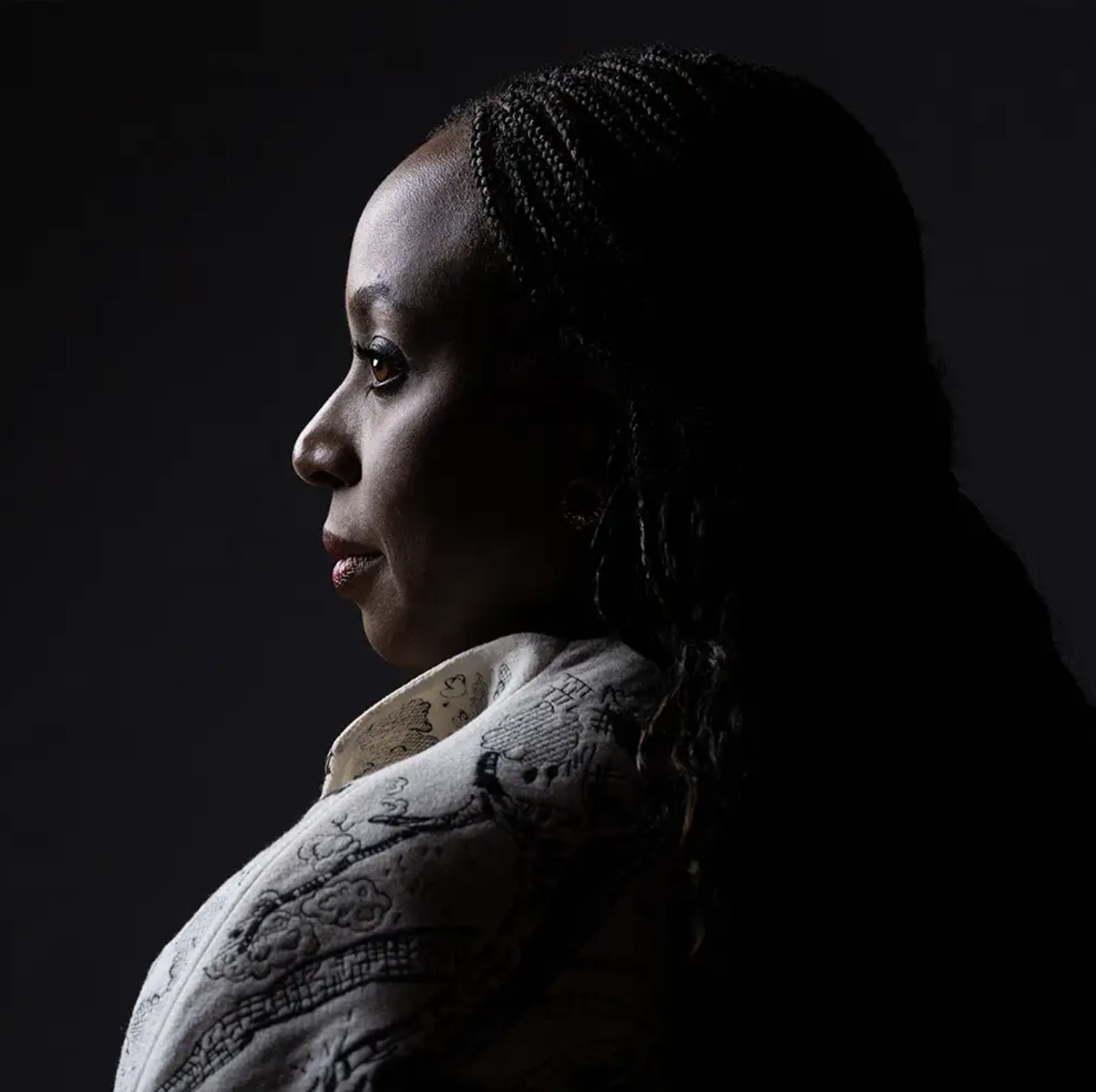
Chimamanda Ngozi Adichie. Photo by Joel Saget.
Two profound emotional events eventually shifted the ground beneath her. First, in the summer of 2020, Adichie’s father died from complications related to kidney failure, and then, a few months later, in March 2021, her mother died unexpectedly on her late husband’s birthday.
“It felt like a bad novel,” Adichie says. “If it had been one of my writing students who came up with that storyline, I would have told them, the story is too much, the metaphor is overdone. But it did happen, and in many ways I still have not accepted it.”
Adichie’s disarming humour, present even when addressing the heaviest of subjects, creates an atmosphere of ease and intimacy. At a session in a crowded hall in Sharjah, she moved fluidly from reflecting on the depth of her love for her parents to describing her visceral response to her father’s death, recounting how she fell to the floor, overwhelmed by loss. “You don’t know how you will grieve until you grieve,” she said, before gently guiding the audience back to laughter with anecdotes—how her mother would bow when attending her events, referring to herself as “the producer of the author,” and how her father would annotate her manuscripts with notes in the margins, ranging from “superb” to “incomprehensible”.
Yet, while being open with her emotions and personal stories, she retains an air of mystery, evading with ease the questions she doesn’t want to answer. I ask how much of herself she writes into her characters, suggesting that Adichie might be found somewhere between Chiamaka, the principal character in Dream Count, and Omelogor, her rebellious, outspoken cousin. In response, she laughs, “I’ve heard people say that.” I have other questions about her characters: Why did Zikora appear first in a short story and then later as a lawyer in this novel? What about Chiamaka, the small child called ‘Baby’ for much of Half of a Yellow Sun, is there any connection between her and the travel writer Chiamaka in Dream Count? She deftly avoids the questions and shares instead a childhood memory of reading works by Enid Blyton, an English author of children’s books. She relished the stories, the characters, despite the unfamiliarity of their lives. “I had no idea what went on at a circus, or why people would eat cucumber sandwiches,” she says.
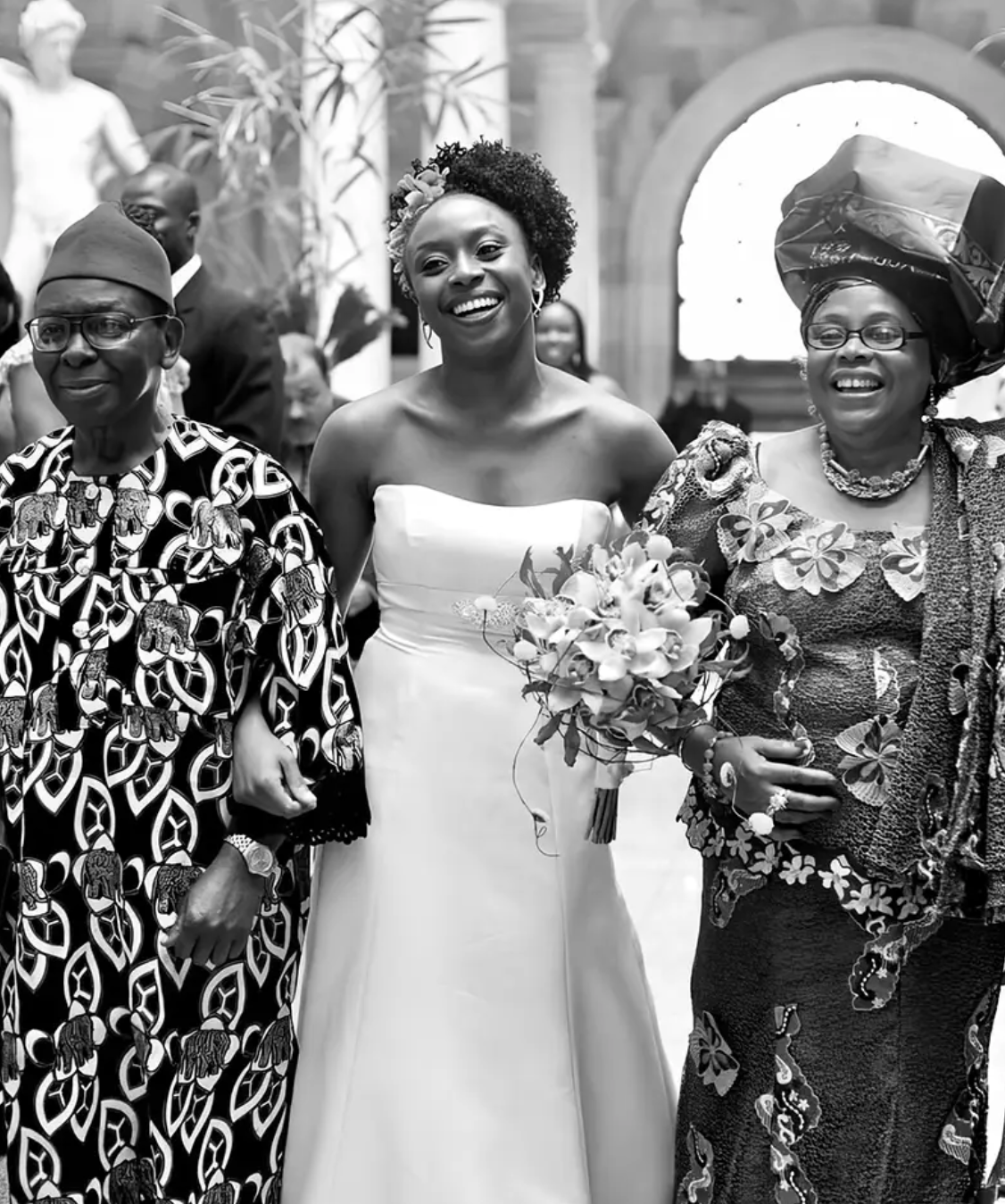
Chimamanda Ngozi Adichie at her wedding, with her parents. Courtesy of Chimamanda Ngozi Adichie.
Adichie says she cannot remember a time when she wasn’t writing. She says that both her love of, and gift for, fiction feel innate, something she was born with. It is in this context that she explains why, after her mother’s death, she was finally able to write again. “I have always been drawn to story, and I feel that my ancestors sent me this gift,” she says. “I also feel strongly that when someone leaves us physically, something remains. After almost 10 years of not writing, during which the characters had been swirling around in my head, suddenly I could get them out. I think my mother helped me.”
In the author’s note at the end of Dream Count, Adichie explains how the novel came together in the wake of her parents’ deaths, and why it returns so insistently to complex mother-daughter bonds, explored through the very different lenses of its four female protagonists.
She also reveals that the story of Kadiatou (notably her first non-Nigerian and first working-class female protagonist) is a fictionalised reworking of a widely reported 2011 legal case involving a Guinean hotel worker and an international public figure. That case was dropped after prosecutors raised concerns about matters related to the evidence and process—a storyline that Adichie examines in depth, situating it within the novel’s broader exploration of power, vulnerability, expectation, and motherhood.
Yet, when the novel closes, it is the collective weight of all four women’s stories that lingers. Zikora’s pain in the aftermath of loss. Chiamaka’s romantic, and perhaps futile, belief that love might still offer salvation. Omelogor’s fierce insistence on independence. And Kadiatou’s quiet endurance. Together, their narratives form a portrait not only of womanhood, but of a society shaped by intimacy and inequality, longing, and restraint.
We leave Dream Count much as we left Adichie’s earlier novels, with the sense that we understand Nigeria a little better. Perhaps we have never eaten kola nuts or smelt jollof rice simmering on the stove, but through her writing these details become strangely familiar. In this way, her work mirrors her own childhood reading of Enid Blyton: worlds once foreign become intimate, even if their rituals—circus tents or cucumber sandwiches—remain slightly puzzling.
Through her ability to write Nigerian people, food, class systems, ethnicity, and identity with such layered nuance, without simplifying or explaining them away, Adichie is often described as a cultural figurehead. She accepts it with characteristic grace. “I do not write and think, I shall now be the voice of a generation,” she says. “When I write, it is a mix of excitement, hope, and self-doubt. You are trying to write the best sentence you can, and you are hoping that you write something people will connect to. In the end, it is just me and that hopefully not blank page.”