
Art Dubai at 20, Future, Past and Present
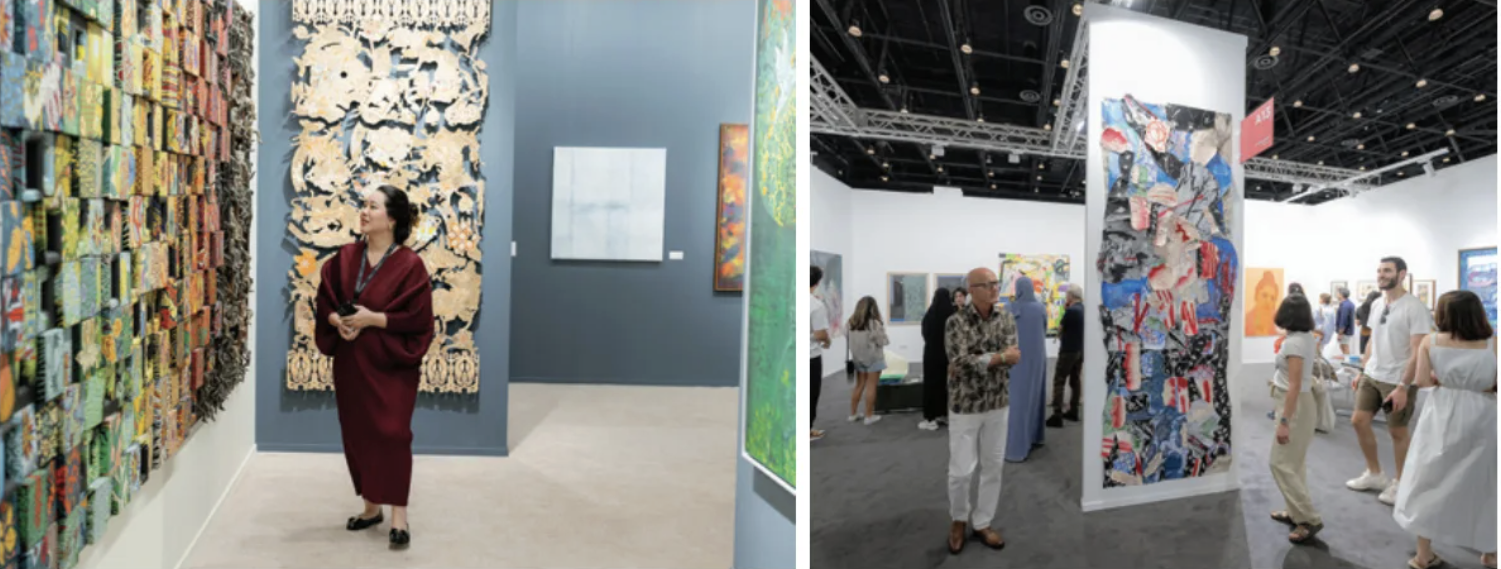
[L-R] Art Dubai 2025. © Ribeiro Cedric and Spark Media for Art Dubai.
In 2026, Art Dubai turns twenty. The anniversary edition, presented under the theme ‘Future, Past, Present’, is a milestone fair that both reflects on the past and looks forward to the rapidly evolving future. It arrives at a pivotal moment for the Gulf’s art landscape, as major international fairs enter the region and institutions across the Middle East consolidate their presence. What was once described as an emerging scene is now firmly embedded within the global art circuit.
Yet Art Dubai predates this latest shift. Founded in 2007 on the premise that Dubai could serve as a meeting point for artists, ideas and cultures, the fair has grown alongside the city itself. What began as an ambitious annual gathering has evolved into something more layered: part marketplace, part forum, part commissioning body, part educational platform. The twentieth edition is a celebration of all that it has achieved but it also signals a new chapter as it enters its third decade. Art Dubai now positions itself as both an annual fair and a year-round cultural platform.
“For 20 years Art Dubai has been instrumental in shaping Dubai’s creative identity, and it now stands as one of the world’s most distinctive art fairs in one of the world’s most dynamic and global cities,” says Dunja Gottweis, the fair’s new incoming director. “Culture and creativity are shaping a vibrant and enduring art scene in Dubai, supporting a global network of artists, gallerists, collectors and curators. They, in turn, are shaping a locally grounded and year-round living cultural ecosystem. “This year’s revamped gallery sections and ‘Future, Past, Present’ framework continues our commitment to this region’s unique historical context, to ultra-contemporary and evolving practices, as well as to innovative and future-facing approaches.”
“This year’s revamped gallery sections and ‘Future, Past, Present’ framework continues our commitment to this region’s unique historical context, to ultra-contemporary and evolving practices, as well as to innovative and future-facing approaches.”
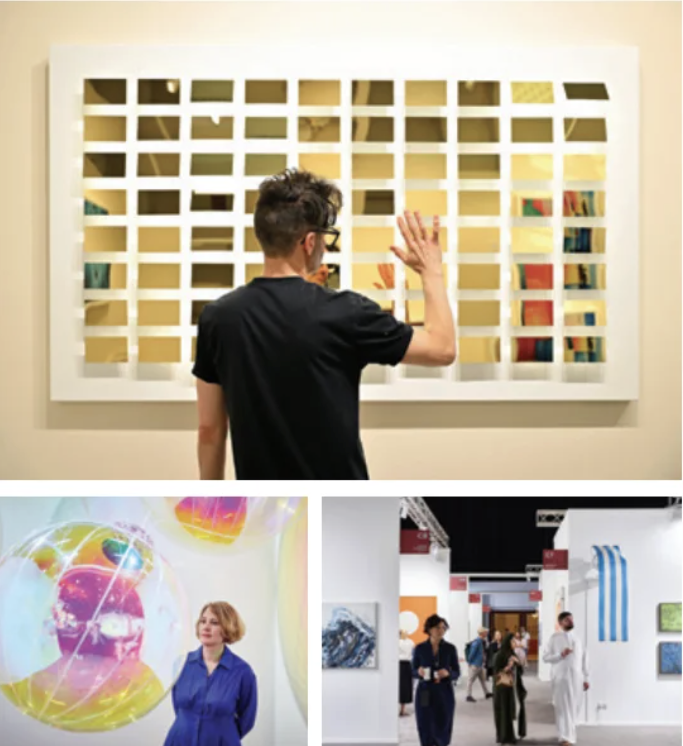
[T] Art Dubai 2025, Breakfast Portrait. © Cedric Ribeiro/Getty Images. [B-L-R] Art Dubai Bawwaba 2025. © Cedric Ribeiro for Getty Images and Spark Media for Art Dubai
INSIDE THE 20TH EDITION
This year’s fair, 14 to 17 May 2026 at Madinat Jumeirah, Dubai, brings together 120 exhibitors from 35 countries, with more than half of participating galleries hailing from the Middle East, North Africa and South Asia. From its earliest editions, Art Dubai has positioned itself as a platform for artistic voices from the often-underrepresented Global South regions. Two decades on, that positioning is now part of its identity. The 2026 programme also introduces newly conceived sections and an expanded roster of installations, performances and talks.
FUTURE: DIGITAL AT FIVE
Launched in 2022 as the first art fair to host a dedicated digital section, Art Dubai Digital reaches its fifth edition this year. Curated by Ulrich Schrauth and Nadine Khalil, the 2026 theme, Myth of the Digital, examines the entanglement of technology, perception and art history.
The 2026 edition positions digital art not as a niche genre, but as embedded within the broader trajectory of contemporary practice. “This is especially important today because technology is so much part of our lives,” explains Nadine Khalil. “We are technological beings. Our brains are stored on our computers – we do not see that distinction – so that is why Ulrich and I joined forces to, on some level, change the perception of digital art.”
Installations and commissions this year include a new large-scale interactive work, Infinite Ripples of Generosity, by the kinetic and data artist BREAKFAST, which responds dynamically to visitor presence. Other presentations range from Memo Akten and Katie Hofstadter’s SUPER-RADIANCE to Barry X Ball’s sculptural collaboration with Michelle Lamy and Soliman Lopez’s IRIDIA. Independent works by Miles Greenberg, IREGULAR and Anhar Salem further expand the section’s scope.
Digital here is not speculative or science fiction; it is a recognition that contemporary life is already technologically mediated.
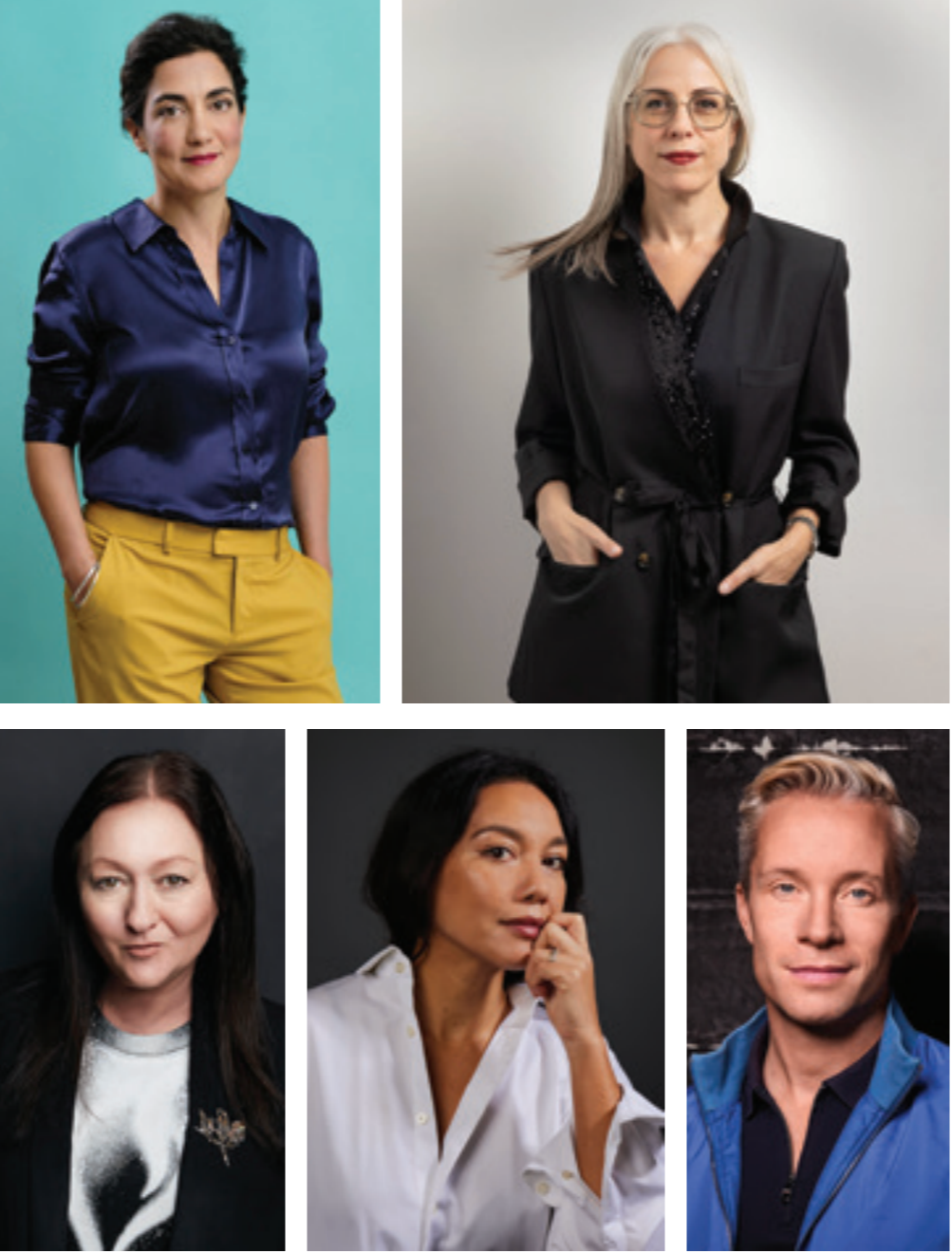
[T-L-R] Sarah Rifky, curator, Zamaniyyat 2026. Dunja Gottweis, Director, Art Dubai Fair. © Peter Ross. [B-L-M-R] Alexie Glass-Kantor, Executive Director Curatorial, Art Dubai Group and Co-curator, Bawwaba Extended 2026. © Zan Wimberley / Art Dubai Group. Amal Khalaf, curator, Bawwaba 2026. © Christa-Holka. Ulrich Schrauth, co-curator, Art Dubai Digital 2026. © Axel Martens
PAST: ZAMANIYYAT
If the digital section gestures toward the future, Zamaniyyat, curated by Sarah Rifky, anchors the fair’s presentations in history. Taking its name from the Arabic word zaman [time], the section focuses on practices from the 1950s to the 1990s, bringing together eleven galleries and 45 artists from over 20 countries. The purpose of this section is to view contemporary practices through a historical lens as well as understanding how systems of education and political conditions have influenced art across generations and regions.
Highlights include Gazbia Sirry’s five-decade arc of abstraction with Zamalek Art Gallery; Dhoomimal Gallery’s retrospective of Indian abstractionist Bimal DasGupta; AA Gallery’s focus on Casablanca Art School legacies; and Richard Saltoun Gallery’s exploration of exilic modernism across North Africa and the Levant.
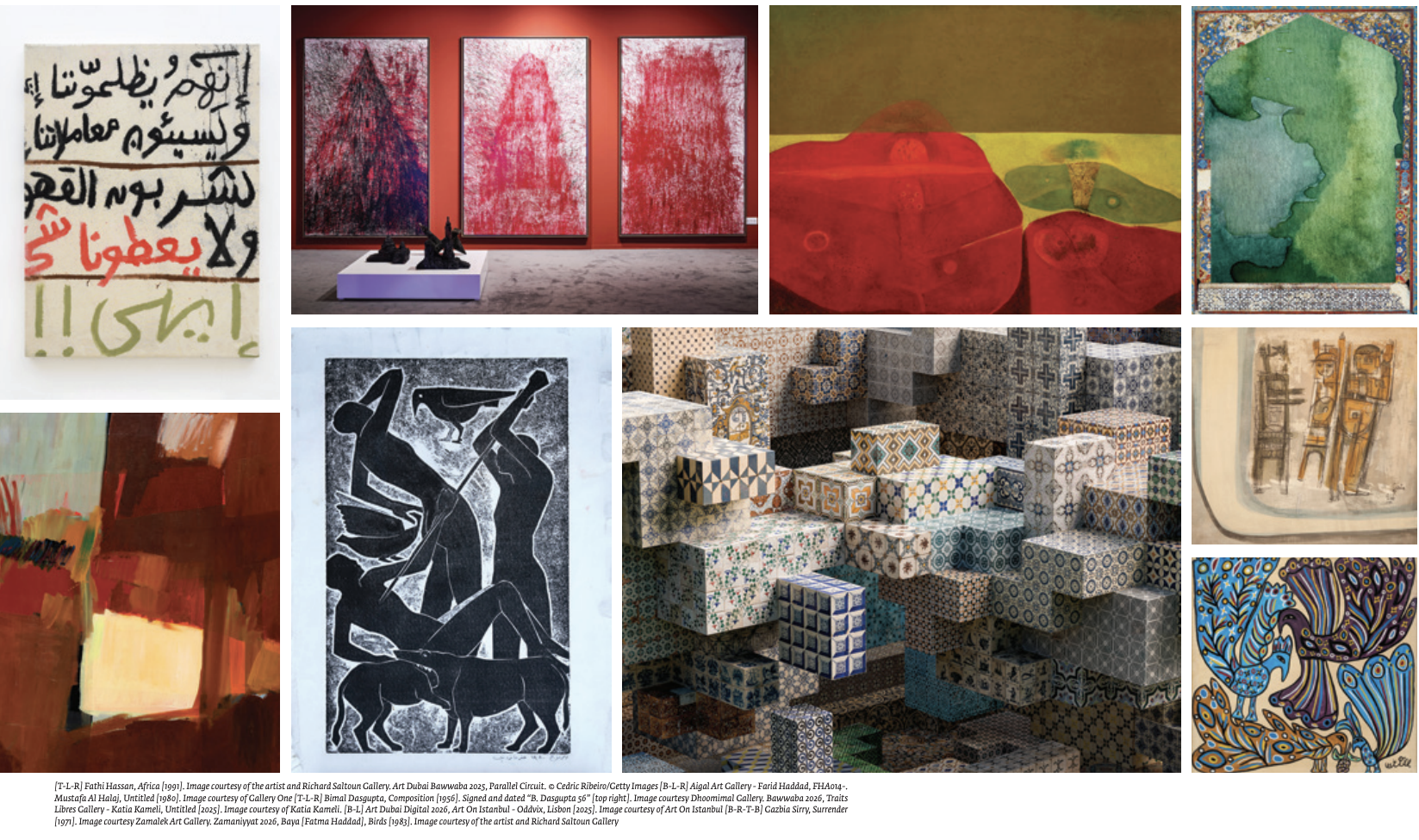
[T-L-R] Fathi Hassan, Africa (1991). Image courtesy of the artist and Richard Saltoun Gallery, Art Dubai Bawwaba 2025. Parallel Circuit. © Cedric Ribeiro/Getty Images [B-L-R] Agial Art Gallery – Farid Haddad, FHA014 - Mustafa Al Hallaj, Untitled (1980). Image courtesy of Gallery One [T-L-R] Bimal Dasgupta, Composition (1956). Signed and dated “B. Dasgupta 56” (top right). Image courtesy Dhoomimal Gallery; Bawwaba 2026, Traits Libres Gallery - Katia Kameli, Untitled (2025). Image courtesy of Katia Kameli. [B-L] Art Dubai Digital 2026, Art On Istanbul - Oddvis, Lisbon (2025). Image courtesy of Art On Istanbul [B-R-T-B] Gazbia Sirry, Surrender (1977). Image courtesy Zamalek Art Gallery; Zamaniyyat 2026, Baya (Fatma Haddad), Birds (1983). Image courtesy of the artist and Richard Saltoun Gallery
PRESENT: BAWWABA AND BAWWABA EXTENDED
The present finds expression in Bawwaba , the curated gallery section founded in 2019 to spotlight emerging voices. In 2026, it continues as a platform for solo presentations by artists engaging deeply with research, identity and diasporic experience. Participants include Arébénor Basséne, Nahla Tabbaa, Katia Kameli, Mohammed Al Hawajri and Adrian Pepe.
This year also introduces a distinct but related platform: Bawwaba Extended. Curated by Amal Khalaf and Alexie Glass-Kantor, it operates beyond the traditional booth format, presenting immersive installations positioned across the fair. Open to galleries regardless of fair participation, it encourages expanded ways of working and activates the Madinat Jumeirah site as a space of encounter.
For the first time, all Bawwaba galleries will benefit from the Bawwaba Gallery Support Programme, a new initiative designed to encourage sustainable growth for young galleries looking to establish themselves in the region’s art market. Developed with the aim of encouraging new models of art fair participation and shared risk, participants pay 50 per cent of the booth fee in advance, with the remainder contingent on fair sales.
Together, Bawwaba and Bawwaba Extended focus on the present and on artists responding to immediate realities through research-driven and spatially ambitious work.
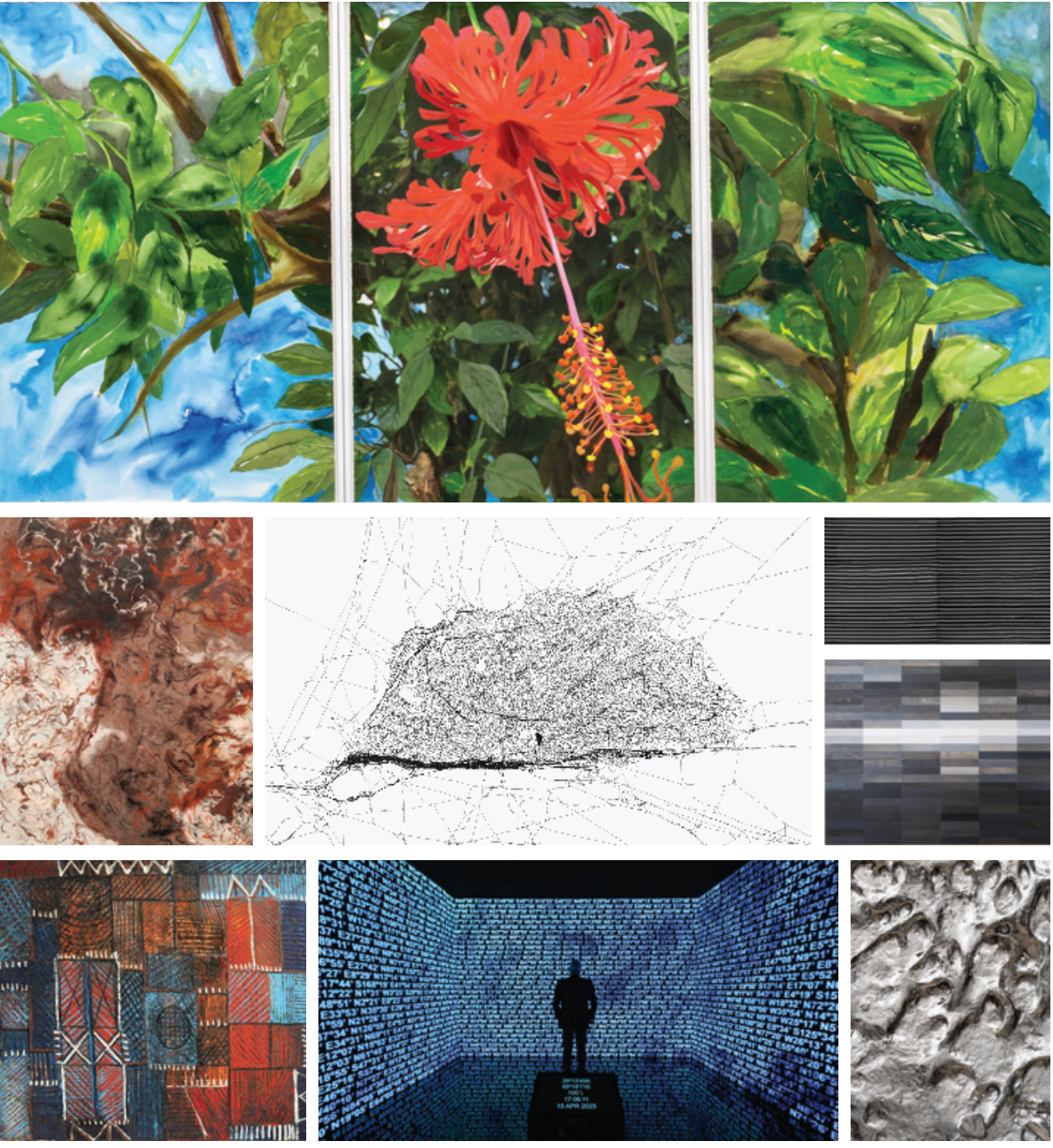
[T] María Magdalena Campos-Pons, Mar Pacífico del Jardín de Amparo, 2025. Image courtesy of Efie Gallery. [M-L-M-R-T-B] ChertLüdde & Selma Feriani Gallery - Monia Ben Hamouda, Vernacular [Blindness, Blossom and Desertification], 2026, Image courtesy of Monia Ben Hamouda, Milan and ChertLüdde, Berlin. Pinksummer - Tomás Saraceno, Handwoven spidermap. Brent Wadden, Untitled, 2017,. Image courtesy of the artist and Peres Projects. Xavier Veilhan, Landscape no8 [Cap Coz], 2024. Image courtesy The Artist. [B-L-M-R] Bertina Lopes, Untitled, 1979. Image courtesy of Richard Saltoun Gallery. Directions [Merging], a new digital artwork by Mohammed Kazem, commissioned by Julius Baer and debuting at Art Dubai. © Cedric Ribeiro / Getty Images. Timur Si-Qin, Sharaan Tafoni (2024). Image courtesy of Albion Jeune
BEYOND THE WEEK
This year, the organisers have introduced Art Dubai Projects, a unifying structure that consolidates the fair’s year-round initiatives. Art Dubai Projects brings together commissions, partnerships, educational platforms and long-term collaborations under a single banner. Rather than existing as ancillary programmes orbiting the annual fair, these initiatives are articulated as part of a continuous ecosystem.
This includes the Alserkal Commission Programme, now in its second year, which extends performance-led and site-specific interventions into the urban fabric of Dubai. It encompasses educational strands such as children’s programming and professional development initiatives. It also reflects institutional partnerships, including a renewed five-year collaboration between Dubai Collection and Dubai Culture and Arts Authority.
The consolidation is significant because it positions Art Dubai less as a once-a-year event and more as cultural infrastructure, which is responsible for incubating ideas, commissioning new work and supporting practitioners across the calendar year.
Held under the patronage of His Highness Sheikh Mohammed bin Rashid Al Maktoum, Vice President, Prime Minister of the UAE and Ruler of Dubai and presented in partnership with A.R.M. Holding, with support from Julius Baer, Piaget, HUNA and Dubai Culture and Arts Authority, the fair is a defining force within the regional art ecosystem.
Twenty years on, Art Dubai is not simply marking time. It is demonstrating how future, past and present coexist within a city that continues to redraw the cultural map.