
The Language of Exile
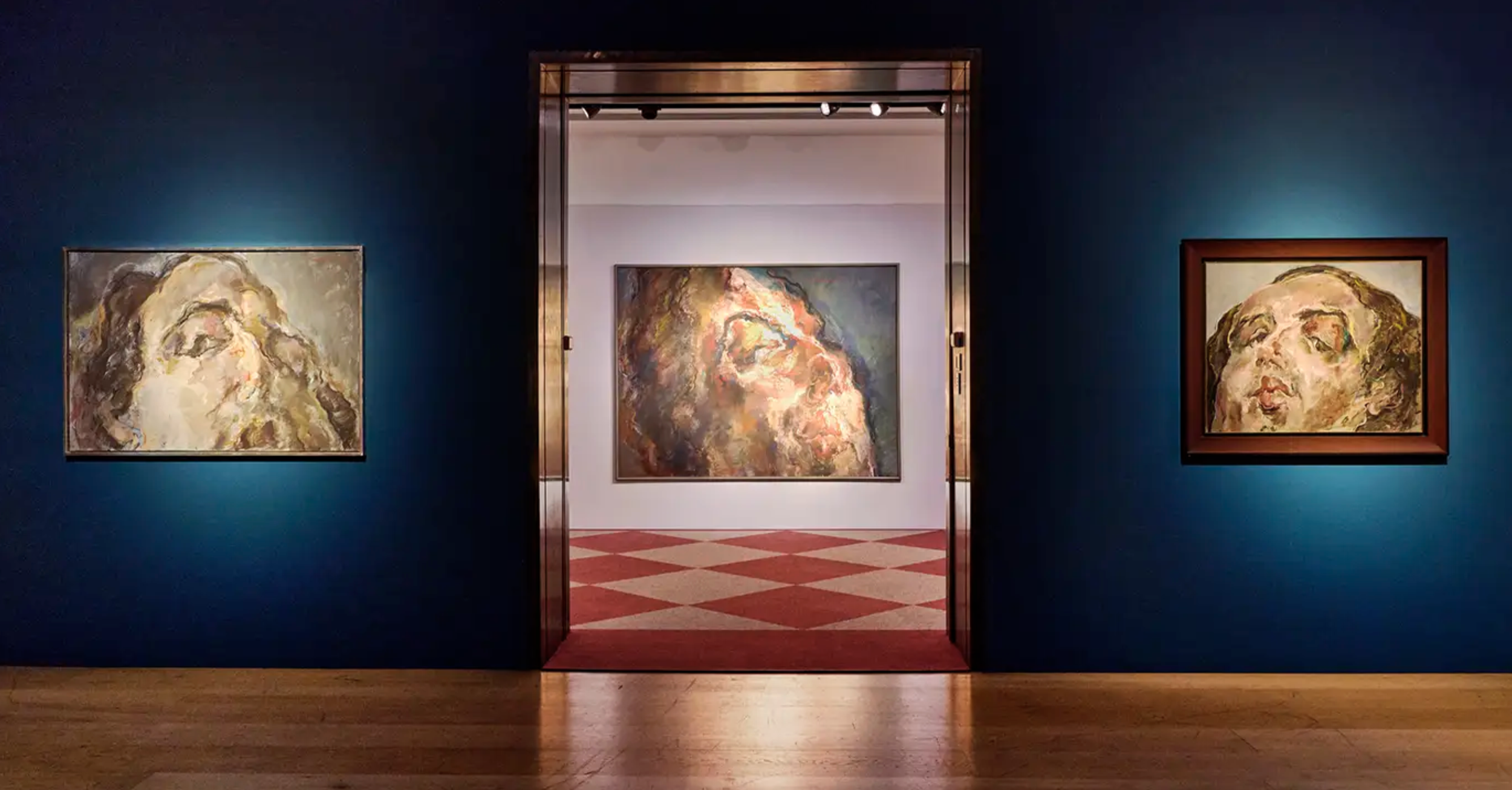
Marwan: A Soul in Exile, installation view from the 2025 Summer Exhibition at Christie’s London. Christie’s Images LTD. 2025
This piece was originally published in Hadara Magazine, Issue 14, Spring-Summer 2026
A Dubai exhibition celebrates one of the most influential figures in modern and contemporary art.
With undulations that resemble topographic features more than facial contours, paintings by Marwan Kassab-Bachi—commonly known as Marwan—were described by his friend, the Syrian poet Adonis, as “face landscapes” because of their ability to capture intense psychological states and inner emotions.
Born in Damascus in 1934, Marwan moved to Cold War Berlin in 1957 to study at the University of Fine Arts. He was a prolific artist who used painting as a means of expression to capture the isolating experience of displacement in a city in flux. “Marwan’s paintings speak the language of exile,” says Dr. Ridha Moumni, chairman of Christie’s Middle East and Africa, “but only if one is willing to truly read them: to grasp the state of mind, to engage with the writings about him, and to understand the deep relationships he cultivated with Arab poets and writers.”
It is this aspect of his practice that is being brought to the fore in an exhibition in Dubai this April. From April 12 to 22 at Concrete in Alserkal Avenue, Marwan: A Soul in Exile is a re-envisioned iteration of the major retrospective exhibited last summer at Christie’s in London. It situates Marwan’s practice within the wider intellectual and artistic networks of the Arab world. The exhibition emphasises his role in nurturing artistic communities, maintaining close relationships with Arab writers such as Abdul Rahman Munif, and supervising the Summer Academy at Darat al Funun in Amman between 1999 and 2003—a programme that brought together 60 artists from across the region.
“At Alserkal, our work is rooted in supporting artists and institutions that shape contemporary culture pertinent to our region,” says Vilma Jurkute, its executive director. “Marwan’s exhibition continues an important conversation about the historic resonance of Arab art and its power to inspire and shape a new generation of artists.”