
From Abu Dhabi to Toronto: Illuminating Islamic Art For a New Generation
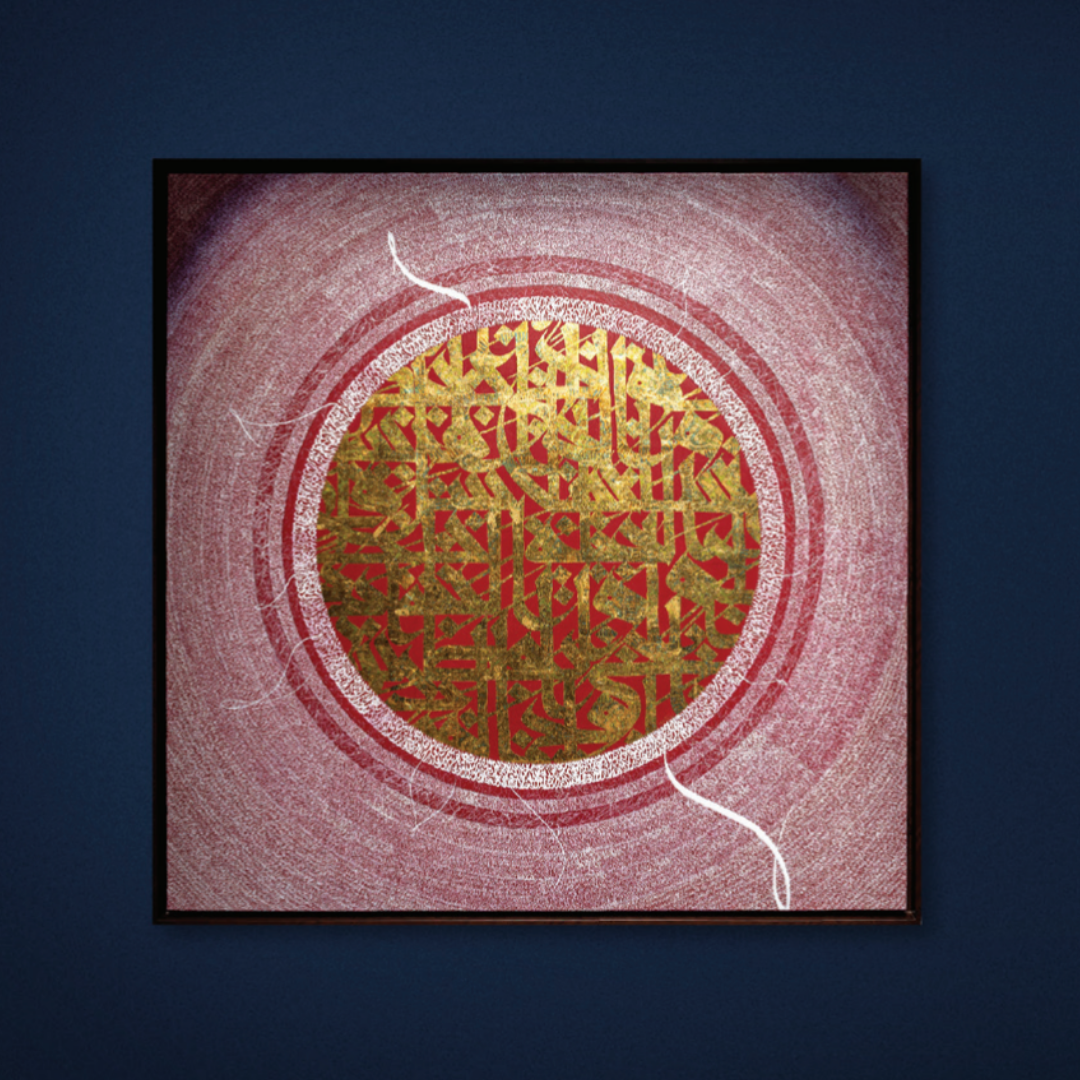
Tawaf, 2021. © Aly Manji
The rising sun has, for millennia, signalled hope, renewal, and the promise of new beginnings. In the exhibition As the Sun Appears from Beyond, these ideas are reignited through the lens of Islamic art and tradition. Light, both metaphorically and conceptually, serves as the exhibition’s guiding force, offering spiritual insight as well as a curatorial framework that connects past and present. It offers a platform not only for aesthetic reflection, but for deeper understanding: a space where viewers can encounter the spiritual, historical, and contemporary expressions of Islamic culture, and find common ground in its beauty.
Open at the Aga Khan Museum in Toronto from June 2025 to February 2026, As the Sun Appears from Beyond marks the North American debut of a major curatorial collaboration between the UAE Ministry of Culture and the Aga Khan Museum. The show is making its North American debut after opening at the 18th Al Burda Award ceremony, at Louvre Abu Dhabi in December 2024. It comprises more than 60 works that span Arabic calligraphy, abstract painting, illumination and contemporary practices that are placed in dialogue with historical masterpieces from the museum’s permanent collection enabling visitors to engage with the extraordinary creativity of artists working across the Islamic world today as well as casting older works in new lights.
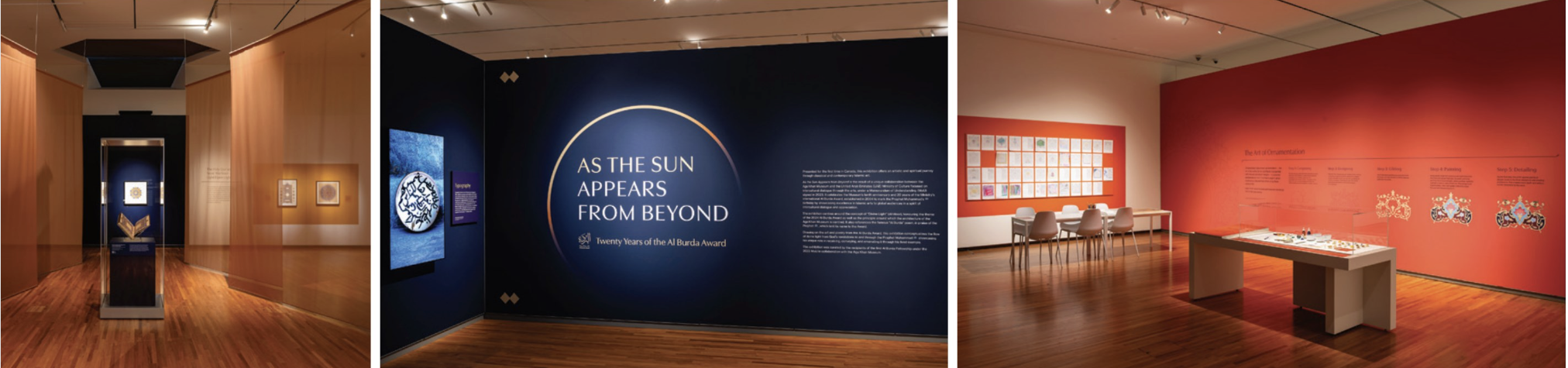
[L-M-R] Aga Khan Museum, As the Sun Appears from Beyond exhibition. © Aly Manji
At the heart of the exhibition is a unique partnership. As the Sun Appears from Beyond was co-curated by three young Emirati women – Fatma Mahmoud, Sara bin Safwan, and Shaikha Al Zaabi – who form the first cohort of the Al Burda Fellowship. Selected by the UAE Ministry of Culture, they completed a professional residency at the Aga Khan Museum in 2024, where they collaborated closely with the museum team, led by Director and CEO Dr Ulrike Al-Khamis. Their curatorial journey reflects a deeper commitment to cultural diplomacy, capacity building, and artistic exchange, which are values enshrined in the Memorandum of Understanding signed between both institutions in 2023.
The theme of Al Noor [light] weaves through the exhibition’s conceptual and aesthetic fabric. It acts as a spiritual metaphor and a material presence illuminating manuscripts, dancing across surfaces, or pulsing through sound. This multifaceted approach allows light to become a bridge: across centuries, across cultures, across personal and collective meaning.
For the UAE, the Al Burda Award, which is now in its 20th year has become more than a national accolade. It is a global platform for contemporary Islamic creativity. Its presentation in Canada reflects the country’s broader role as a platform for of cultural dialogue and a champion of emerging voices. And for visitors in Toronto, it offers a rare encounter with the diverse beauty and depth of Islamic artistic expression.
Here, Shawati’ interviews Dr Ulrike Al-Khamis who shares her reflections on the making of the exhibition, the significance of the UAE-Canada partnership, and the evolving role of Islamic art in fostering crosscultural understanding.
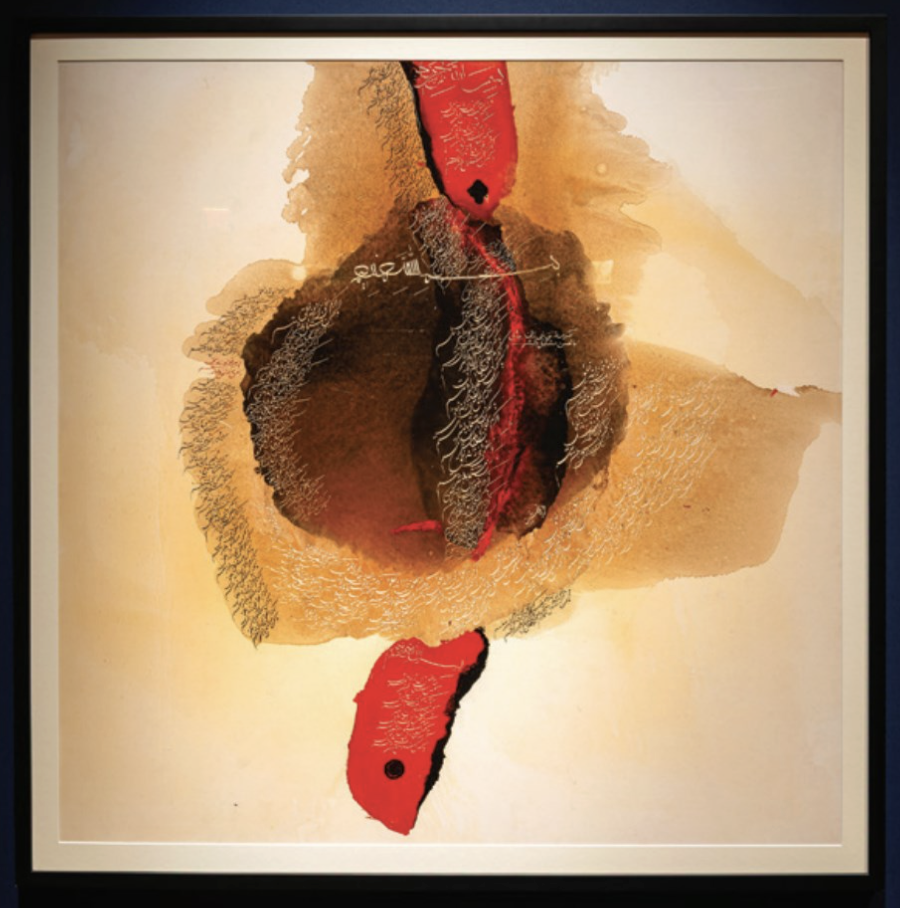
Muhammad Arif Khan, 2009. © Aly Manji
The exhibition brings together more than 60 contemporary artworks from the Al Burda Award collection in dialogue with historical masterpieces from the Aga Khan Museum Collections. Could you walk us through the curatorial process behind establishing this conversation between past and present?
Guided by the theme of Al Noor – chosen to honour both the Al-Burda Award’s 20th anniversary and the 10th anniversary of the Aga Khan Museum – our Emirati co-curators and the Aga Khan Museum team reviewed the Ministry of Culture’s extensive Award Art Collection and the historic collections of the Museum with the intention of bringing contemporary and historical artworks into innovative aesthetic and spiritual dialogue beyond conventional, western-centric definitions of both Islamic and contemporary art.
How did the perspectives of your co-curators shape the narrative of the show, and to what extent can we trace an Emirati influence throughout the exhibition?
Fatma, Sara and Shaikha led throughout in conceptualising and shaping this exhibition. The whole idea was to present a concept that presents contemporary and indeed historical Islamic art from within, i.e. from an Emirati, Arab and Muslim perspective. The fellows were instrumental and played the central role in choosing the artworks, conceptualising the storyline for the exhibition, advising on the design and undertaking necessary research.
This exhibition stems from a formal collaboration between the UAE Ministry of Culture and the Aga Khan Museum. Can you tell us more about how this partnership came about and how it aligns with the museum’s wider mission?
The exhibition builds on our shared ethos to foster intercultural dialogue and understanding through the arts of the Muslim world. The Aga Khan Museum’s mission is to foster wonder, curiosity and understanding of Muslim cultures and their connection with other cultures. In doing so, its vision is to positively impact lives and contribute to peaceful, pluralistic societies.
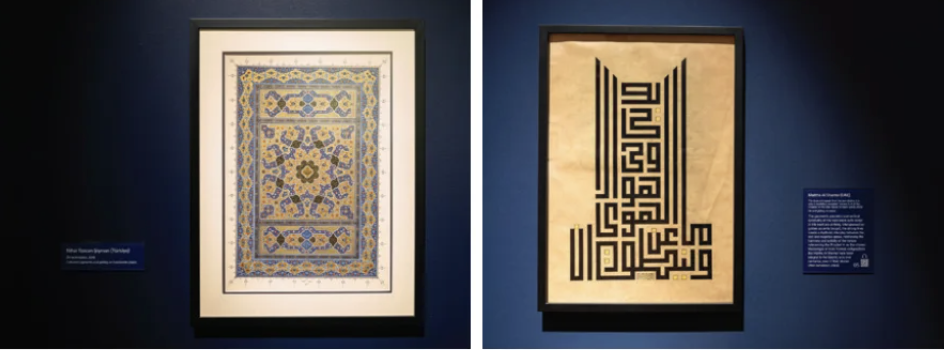
[L-R] Ornamentation by Nihil Tezcan Sisman, 2016. Maitha Al Shamsi, 2006. © Aly Manji
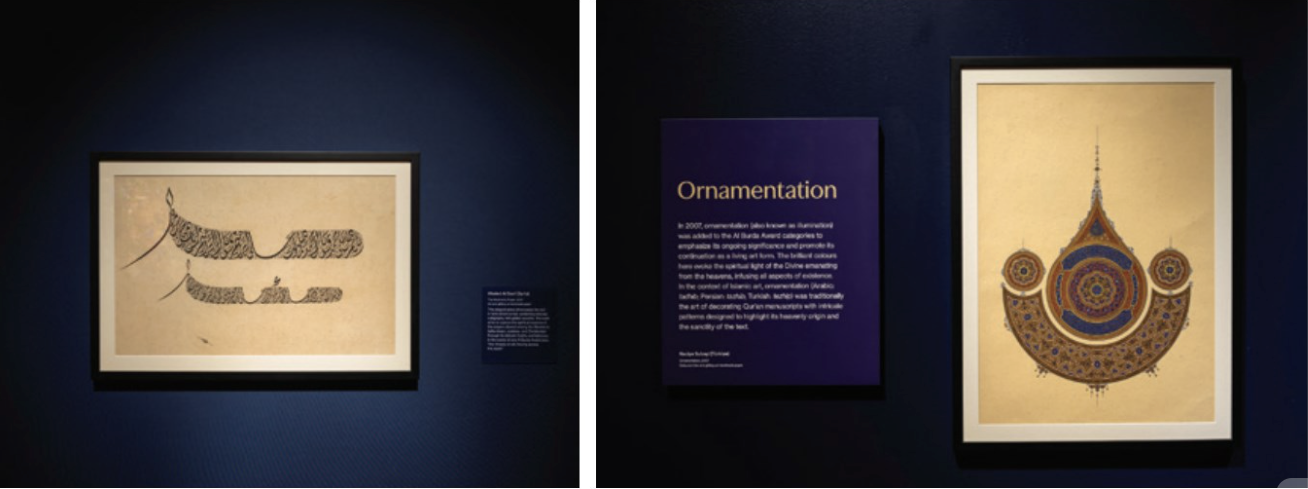
[L-R] The Abrahamic Prayer , 2007. Ornamentation by Naciye Subaşi, 2007. © Aly Manji
What does this cross-institutional partnership reveal about the UAE’s evolving approach to cultural diplomacy and global engagement and how does this exhibition reflect the strength of cultural ties between the two nations?
The Aga Khan Museum and the UAE Ministry of Culture are aligned in the importance and significant impact potential of arts and culture as global ambassadors for building mutually beneficial, peaceful global relationships and intercultural dialogue. As the Sun Appears From Beyond is an example of what can be achieved when hearts and minds come together across cultures and beyond differences in a spirit of shared exploration, learning, and creation in the essence of peace and understanding.
From your perspective, what is the significance of Al Burda as a platform and how has its role in shaping contemporary Islamic art evolved over the past two decades?
The Al Burda Award, first inaugurated in 2004, stands out in many ways. Its effort to support contemporary Muslim artists in their quest to continue creating and thriving in their commitment to highly sophisticated classical traditions is both remarkable and significant, as is the showcasing of their achievements to the world. This effort is particularly important in an increasingly globalised world in which such traditions are often abandoned or pushed aside in the face of ever more dominant, globally pervasive, definitions of what qualifies as art and indeed contemporary art and what does not. The Award is also remarkable in that it bridges tangible and intangible arts, including not only calligraphy, ornamentation and ‘hurufiyyat’, but also – and most centrally – poetry, thereby again challenging conventional definitions, notions and perceptions while projecting an authentic and holistic, local understanding of Islamic Arts to audiences in the region and abroad.
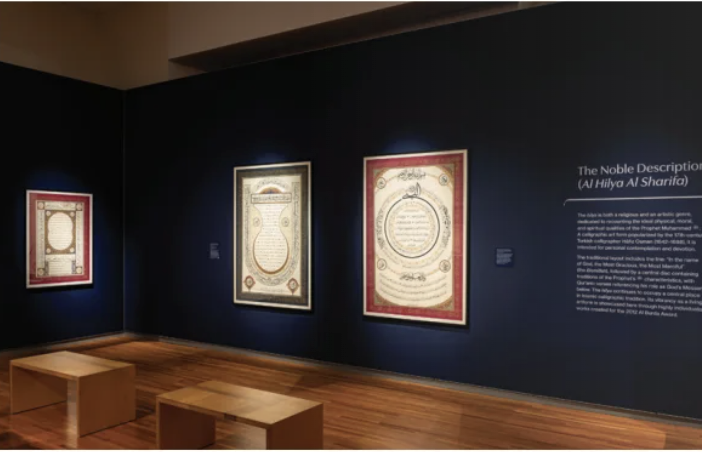
Aga Khan Museum, As the Sun Appears from Beyond exhibition. © Aly Manji
The central theme of the exhibition is Al Noor [light], which carries spiritual resonance across cultures. Should this be viewed primarily through an Islamic lens, or does its universality invite broader interpretation?
The exhibition is designed to first and foremost project the notion of Al Noor as spiritual light through its outstanding aesthetic beauty and technical sophistication. In that respect we worked very hard to make it wholly accessible for all audiences, Muslim and non-Muslim. Our exhibition design purposefully invites visitors into immersive, contemplative spaces that can be enjoyed irrespective of religious or cultural backgrounds. At the same time, there is plenty of information for all those who want to grow their knowledge and understanding beyond an exclusively aesthetic experience.
A stated goal of the initiative is to bridge traditional Islamic art with contemporary global perspectives. Was curating across these historical and cultural contexts challenging?
Our innovative approach to the curation of this exhibition was a journey of discovery and of challenging conventional norms. In the process, we were committed to encouraging new thinking around conventionally accepted perceptions of Islamic and contemporary art, while emphasising the crucial importance of showcasing and representing both from locally and culturally appropriate perspectives – priorities indeed of both the Al Burda Award and the work of the Aga Khan Museum.
How does this presentation differ from the earlier iteration shown at Louvre Abu Dhabi and were there significant curatorial or experiential changes made for the Toronto audience?
In a sense, the exhibition was indeed curated twice, the first iteration for a UAE audience broadly familiar with the themes and art forms of the Al Burda Award, and the second iteration for a North American audience largely unfamiliar with them, therefore requiring a considerable degree of additional interpretation and opportunities for intercultural learning. For the Toronto iteration, rare historical objects from the Aga Khan Museum were added to emphasise the centuries-old dimensions and legacies of the sophisticated art forms celebrated by the Al Burda Award and encouraged to thrive in a globalised, contemporary context across the Muslim world and beyond.
You’ve spoken about fostering intercultural artistic dialogue and inclusive engagement. How did these ideals influence the exhibition’s design and visitor experience?
Every aspect of this exhibition project was designed as an exercise in intercultural artistic dialogue and inclusive engagement, starting from the way the curatorial teams from the UAE and the Aga Khan Museum committed to working with each other throughout the process, to the conceptualisation of the exhibition story and design, with its emphasis on intercultural accessibility, and the exhibition catalogue, which not only brings together contributions by the exhibition curators themselves but features a number of other prominent voices in the field of contemporary Arab and Islamic art.
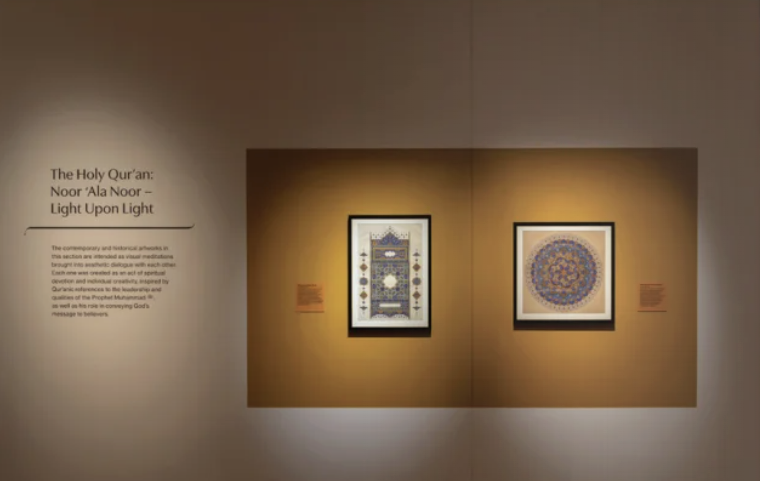
Aga Khan Museum, As the Sun Appears from Beyond exhibition. © Aly Manji
How has the programming been tailored to resonate with different audiences locally in Toronto, and internationally, including Emirati visitors?
The public programming throughout has been designed to echo the theme of Al Noor and enlightenment while also providing insights into broader historical, artistic and technical contexts. Consequently, the programming includes curatorial talks; art workshops devoted to calligraphy and ornamentation; and performances that foreground the central importance and continuing contemporary relevance of poetry, recitation and religious musical expression.
In today’s fractured world, how do you see initiatives like this contributing to a sense of cultural solidarity and community?
This project provided a wonderful opportunity for all participants to learn and create with each other in a spirit of intercultural commitment and understanding, which not only resulted in a remarkable exhibition but a deep legacy of mutual respect, trust, commitment and friendship – the basis for any lasting intercultural dialogue and empathy, needed to build a better world.
Looking ahead, do you foresee future collaborations with the UAE Ministry of Culture and the Al Burda platform?
We are very much looking forward to deepening our collaboration with the Ministry and the Al Burda Award and have already started our brainstorming as to what might come next.